- Introduction to Fire Safety: Importance of fire safety in the workplace.
- Understanding Fire Hazards: Identifying common fire hazards (e.g., flammable materials, electrical faults).
- Fire Prevention Measures: Steps to prevent fires (proper storage, maintenance of equipment).
- Emergency Evacuation Procedures: How to safely evacuate the building in case of a fire.
- Fire Alarm Systems: Understanding the fire alarm system and how to respond when it goes off.
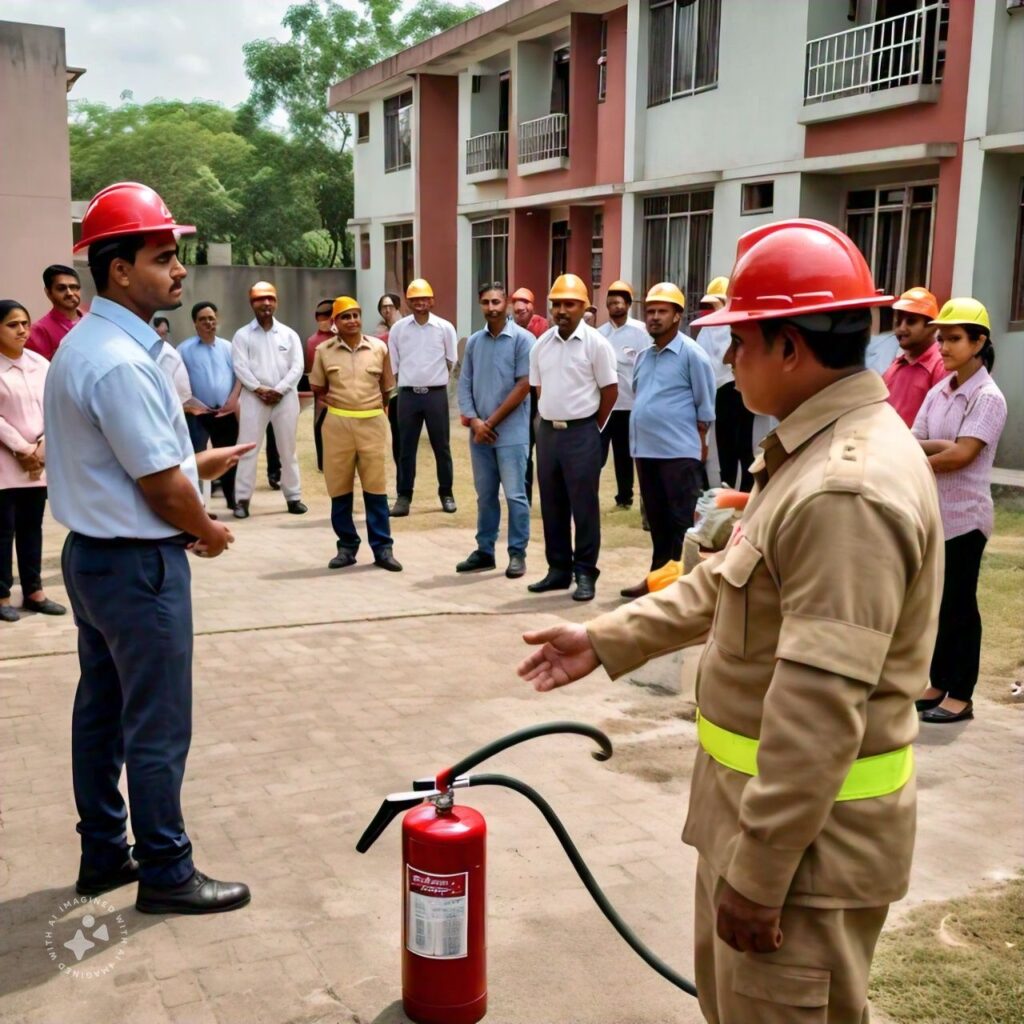
- Use of Fire Extinguishers: Types of fire extinguishers and how to use them.
- Fire Drills: Importance of regular fire drills and participation.
2. Building-Specific Fire and Security Training

- Building Layout and Exits: Familiarization with the layout of the building and emergency exits.
- Fire Detection Systems: Overview of the fire detection systems installed (e.g., smoke detectors, sprinkler systems).
- Building Security Systems: Overview of security systems in place (e.g., CCTV, access control).
- Role of Fire Wardens: Responsibilities of fire wardens in an emergency.
- Reporting Procedures: How to report a fire or security breach.
3. Factory-Specific Fire and Security Training
- High-Risk Areas: Identification of high-risk areas within the factory (e.g., chemical storage, machinery).
- Hazardous Material Handling: Proper handling and storage of hazardous materials.
- Machinery Safety: Safety protocols for operating machinery to prevent fires.
- Lockout/Tagout Procedures: Importance of lockout/tagout procedures to ensure machines are safely powered down during maintenance.
- Security Protocols: Access control measures, surveillance systems, and the importance of adhering to security protocols.
4. Office-Specific Fire and Security Training
- Office Fire Hazards: Common fire hazards in offices (e.g., overloaded power sockets, paper storage).
- Personal Workspace Safety: Tips for maintaining a safe workspace to prevent fire risks.
- Emergency Response Teams: Introduction to the office’s emergency response team and their roles.
- Security Awareness: Best practices for maintaining office security (e.g., locking doors, reporting suspicious activity).
- Cybersecurity: Importance of digital security, especially for offices handling sensitive data.
5. Special Considerations
- Legal and Regulatory Compliance: Overview of relevant local fire and security regulations.
- Special Equipment Training: Training for using specific safety equipment (e.g., fire blankets, first aid kits).
- First Aid and CPR: Basic first aid and CPR training in case of fire-related injuries.
- Post-Incident Procedures: What to do after a fire or security incident, including reporting and investigation.
0 Comments